
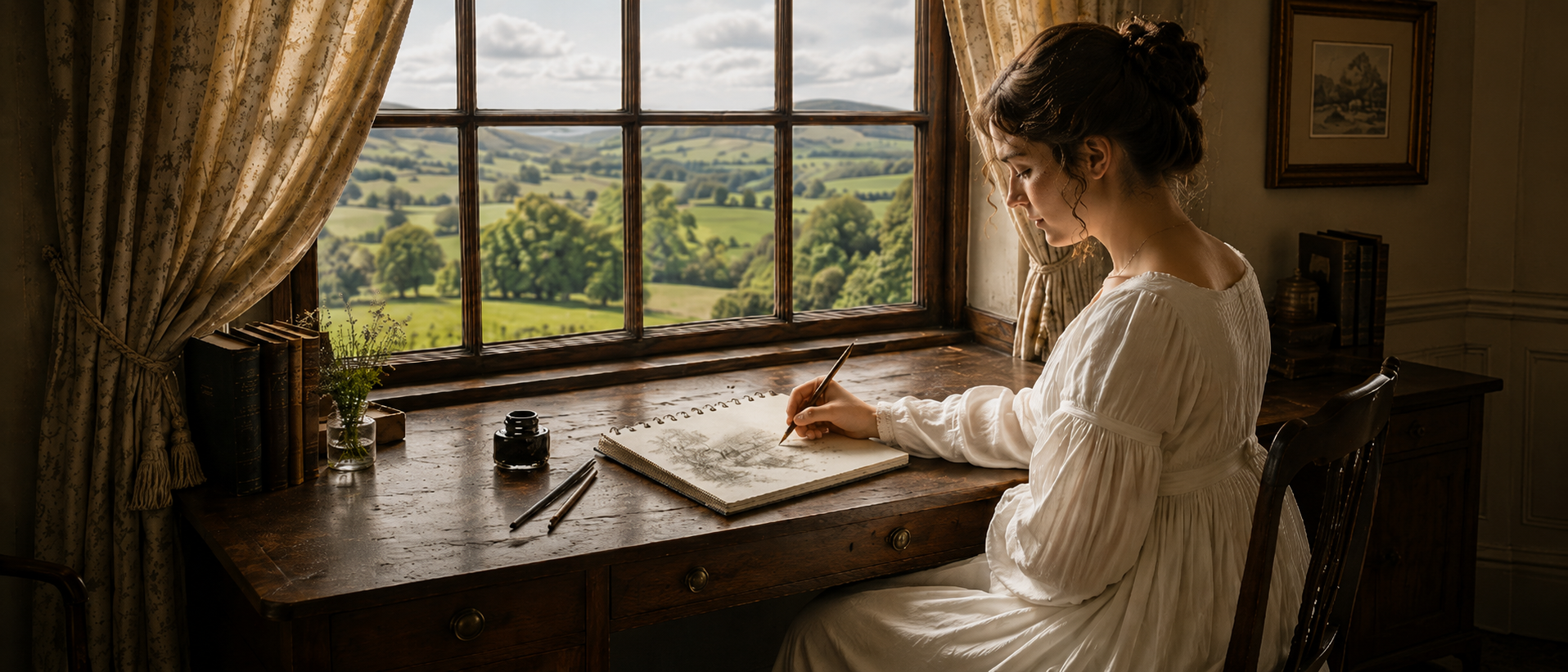
“Sketching teaches us to slow down and notice the world more carefully. In Jane Austen’s time, drawing was not only an accomplishment, but also a way of observing life with quiet attention.””
Artist, writer and teacher Caroline Siassios is the talent behind the illustrations in the Jane Austen Literacy Foundation’s commemorative publication of Pride & Prejudice - the first Austen novel published since 1833.
In today’s article, Caroline explores how young women in Jane Austen’s era learned the arts of sketching and watercolour painting.
Morning light fell through the tall windows of the Hartwell drawing room. Miss Eliza Hartwell sat near the glass with a sketchbook upon her lap, her pencil moving cautiously across the page. Outside, a gravel path curved between rose bushes in bloom.
"Mama," she said at last, "do you think the path ought to be darker here?"
Mrs. Hartwell glanced up from her embroidery.
"Perhaps a little shading, my dear. Mr. Fletcher will advise you. Remember, no accomplishment is gained in haste."
Scenes such as this were common in the Regency period, when drawing, music, and decorative needlework were considered essential accomplishments for a young lady.
Jane Austen captured these expectations in her writing, where they form part of the social world of her novels. In Pride and Prejudice, Miss Bingley declares:
“A woman must have a thorough knowledge of music, singing, drawing, dancing, and the modern languages, to deserve the word.”
Though exaggerated, the remark reflects the genuine expectation that young women should cultivate a range of accomplishments.
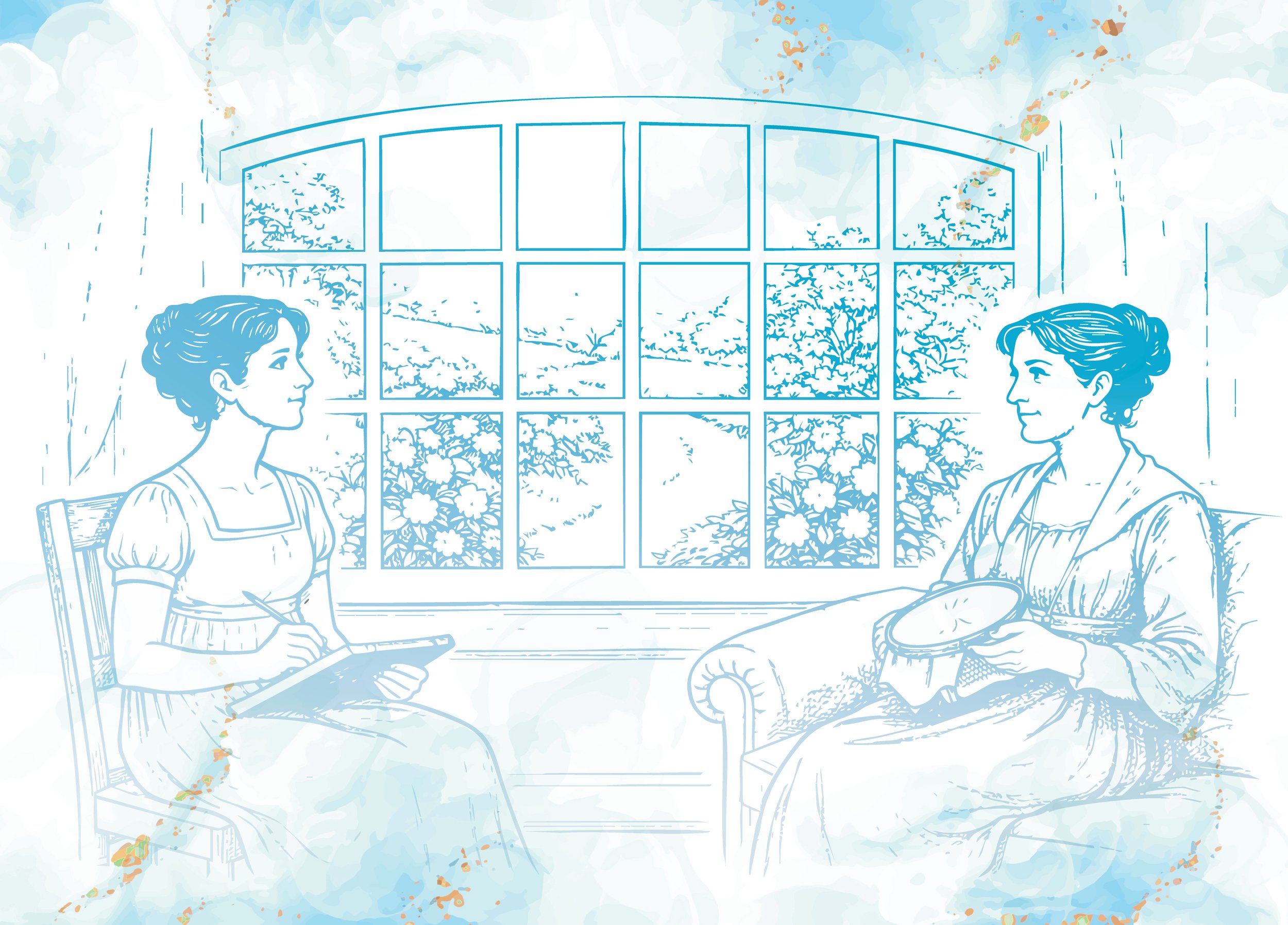
Caroline Siassios, Morning in the Drawing Room, 2026, digital illustration.
Learning the Arts at Home
In Jane Austen’s era, affluent young women were primarily educated at home by mothers, governesses, or visiting tutors to acquire essential "accomplishments." While music and needlework were central, with the pianoforte and decorative embroidery serving as common social displays, drawing was a particularly admired pursuit.
Hired drawing masters taught students perspective and composition, typically through the disciplined copying of engravings, classical statues, and landscape prints. These watercolours and sketches, much like their needlework, were often displayed in the home as evidence of a refined, genteel upbringing.
Later that morning, Eliza sat at a small table while the drawing master, Mr. Fletcher, placed an engraving beside her paper.
"Attend first to the larger shapes, Miss Hartwell," he said. "The details will come soon enough once the foundation is secure."
Eliza inclined her head and resumed her sketch.
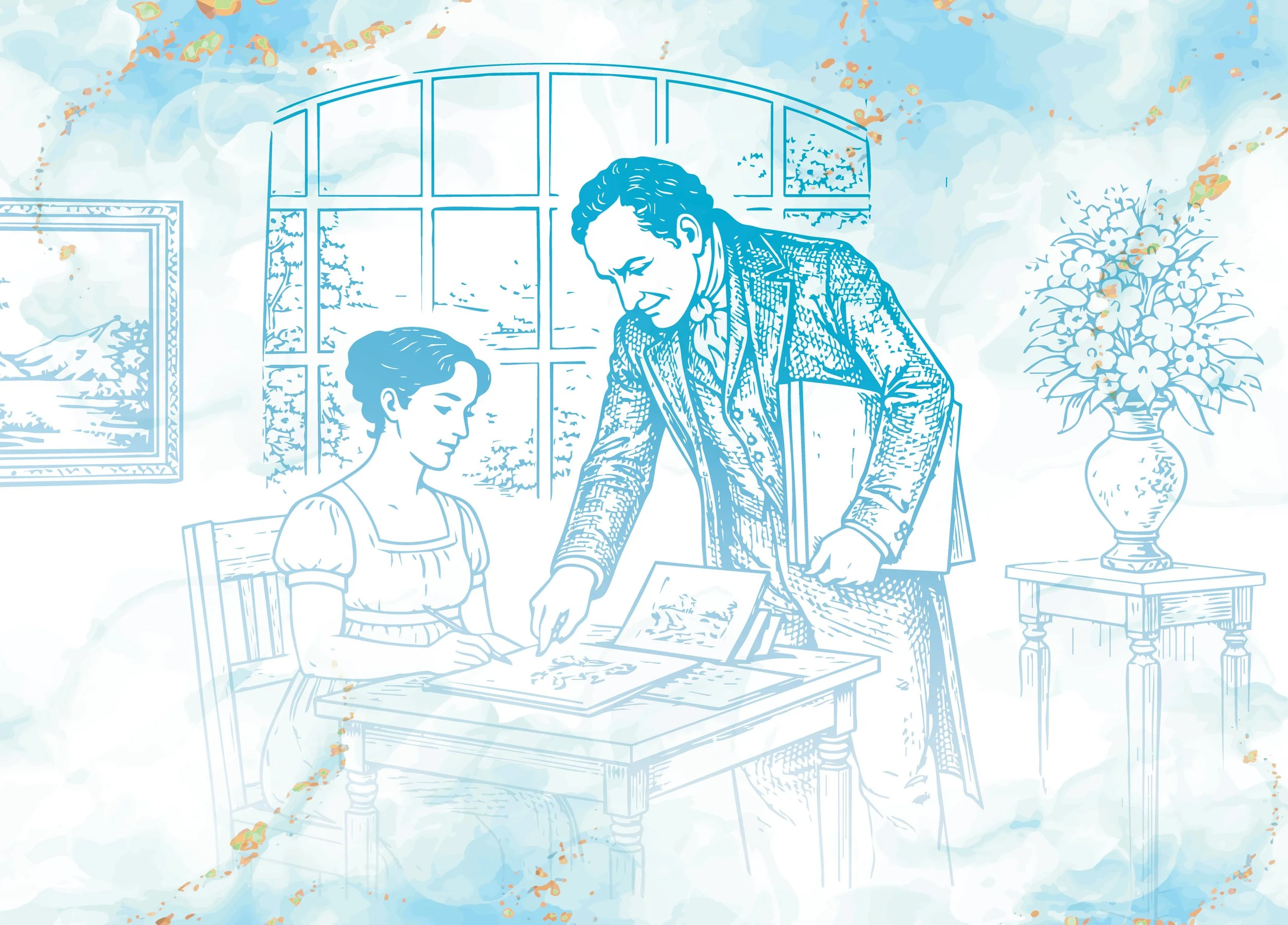
Caroline Siassios, Eliza Hartwell’s Sketching Lesson with Mr. Fletcher, 2026, digital illustration.
Boarding Schools and Formal Instruction
Some girls attended small boarding schools where subjects such as music, drawing, dancing, and French formed part of the curriculum.
Jane Austen herself attended boarding school briefly as a child. These schools emphasised social polish, preparing young ladies for their future place in polite society and marriage rather than providing the broader education we might expect from schools today.
The Regency Love of Sketching and Watercolour
In the afternoon Eliza and Clara walked along the lane beyond the garden gate.
"Pray wait a moment," Eliza said to her younger cousin, pausing beside the wooden stile.
She opened her sketchbook and quickly copied the outline of a distant hill.
Clara laughed softly. "You never walk anywhere without that sketchbook."
"True," Eliza replied, smiling. "But a sketchbook is far easier to carry than a pianoforte."
Sketching outdoors became fashionable during the Regency period, and travellers often carried small sketchbooks to record landscapes or village scenes.
Watercolour painting also gained popularity because its portable materials allowed artists to capture landscapes with a delicacy and lightness unique to the medium.
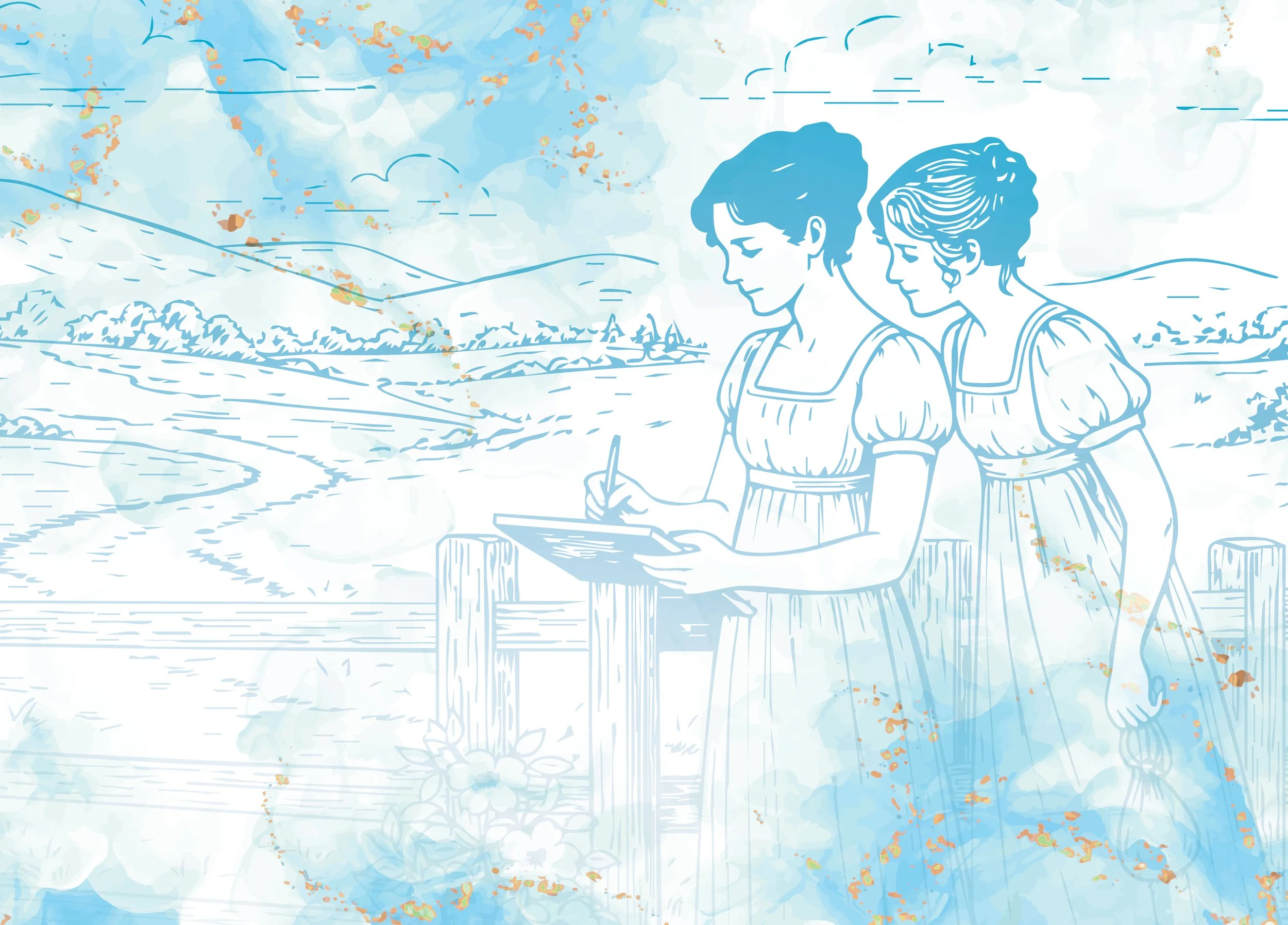
Caroline Siassios, Eliza Hartwell Sketching Beside the Stile with Clara, 2026, digital illustration.
Cassandra Austen: Art in the Austen Family
Within Jane Austen’s own family, artistic accomplishment was encouraged and practised.
Her sister Cassandra Austen was a devoted amateur artist who produced numerous sketches and watercolours, including lively caricatures and portraits.
She is best known for the small watercolour and pencil sketch of Jane Austen, drawn around 1810 and widely considered the only portrait of Jane made from life. Cassandra never pursued art professionally, yet her work shows the level of skill that could be achieved through steady practice.
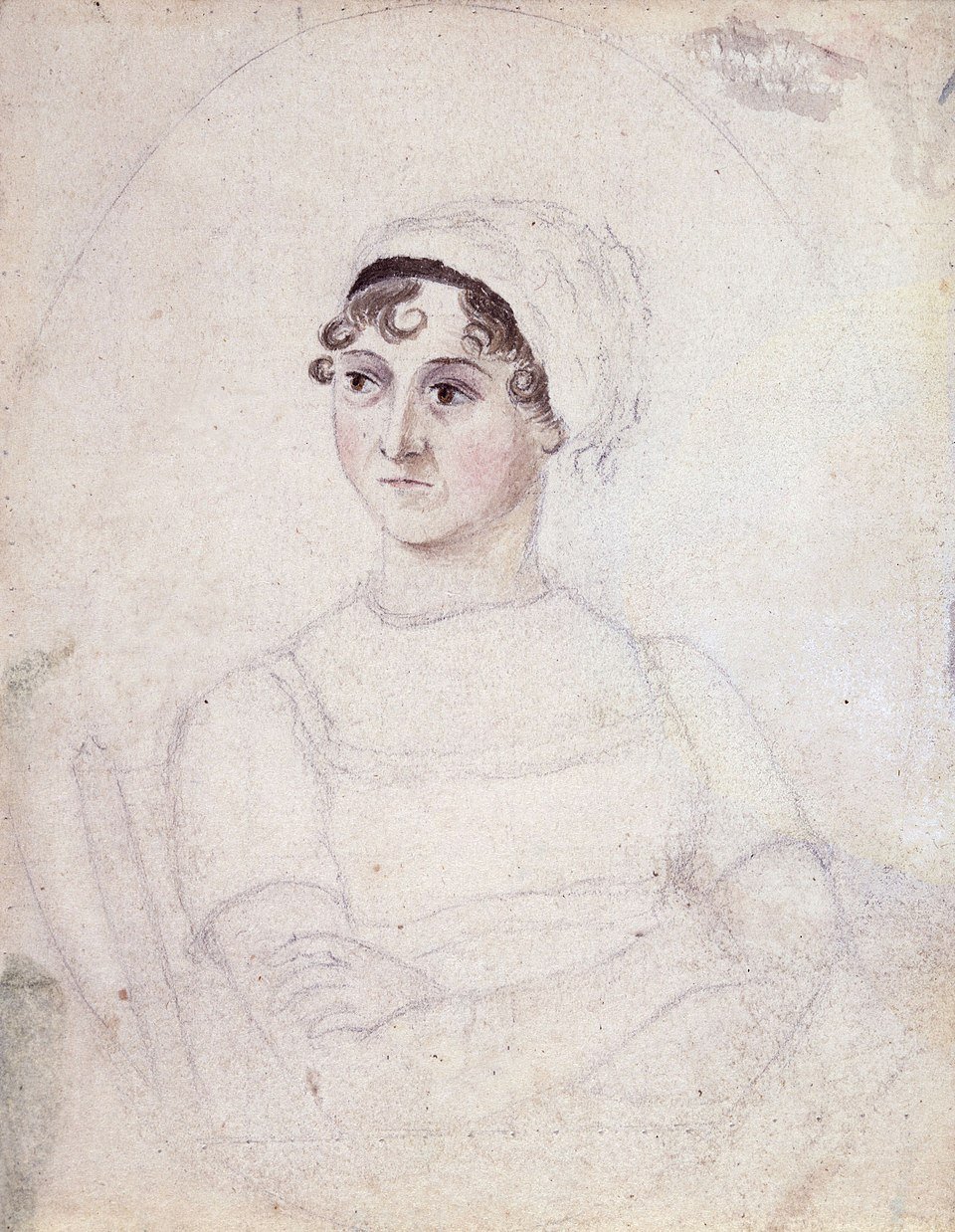
Cassandra Austen, Portrait of Jane Austen, c.1810, watercolour and pencil. National Portrait Gallery, London. Via Wikimedia Commons. Widely considered the only portrait of Jane Austen drawn from life.
Maria Cosway: Artistic Achievement in Regency Society
While many women practised drawing as a private accomplishment, Maria Cosway (1760–1838) transitioned from an elite “amateur” to a prolific professional whose works were regularly exhibited at the Royal Academy. Yet, despite her success, she faced significant barriers; her husband, fellow artist Richard Cosway, often restricted her from selling her work to maintain her status as an “accomplished” wife rather than a professional competitor. This complex dynamic led to a blurring of their artistic legacies, with some of her works historically attributed to him or surviving only as engravings, illustrating how even the most celebrated women had to navigate a world that sought to keep their talent constrained and secondary.
Lady Diana Beauclerk: Watercolour and Illustration
Lady Diana Beauclerk (1734–1808) transformed the "polite accomplishments" of her aristocratic upbringing into a respected professional practice, eventually using her talent to support herself following a scandalous divorce. Her unique social status allowed her to bypass typical barriers, leading to high-profile commissions such as designing iconic bas-reliefs for Josiah Wedgwood’s pottery. By moving her work from private sketchbooks to commercial production and public murals, she offered a rare example of how a woman’s creativity could extend beyond the drawing room into professional practice.
It is easy to imagine the quiet creativity that flourished in the drawing rooms of Jane Austen’s time. Young women practised music, sketched landscapes, and filled sketchbooks with drawings—activities that brought enjoyment, a sense of accomplishment, and a way to capture the world around them. Yet this art often remained a social currency, a decorative reflection of their environment, carefully shaped to display grace rather than invite personal expression.
Today the tools may be different. A pencil or watercolour brush may be joined by a digital stylus. Yet the habit of observing and recording the world remains much the same, together with the satisfaction of learning to translate what is seen more clearly with each attempt. What has changed is the freedom to follow those interests wherever they may lead. What once remained a private accomplishment within the drawing room can now grow into study, profession, and creative expression. Women artists today are free not only to record what they see, but also to explore emotions, ideas, and cultural narratives through their work.
And perhaps, somewhere by a bright window, another young artist pauses over a sketchbook, just as Miss Eliza Hartwell once did, quietly observing the world before setting it down upon the page.
Caroline Siassios
Caroline Siassios is a multidisciplinary artist and designer whose practice spans visual communication and fine arts. With over 30 years of experience across art, design, education, and consulting, she has spent the past 25 years developing marketing and educational materials. She is currently creating and illustrating children’s books that support early literacy, fostering curiosity, confidence, and a love of reading through imaginative storytelling and expressive illustration. Caroline generously gave her time and talent to creating the illustrations for the Jane Austen Literacy Foundation’s commemorative publication of Pride & Prejudice, celebrating the 250th anniversary of Jane’s birth.

The first publication of a Jane Austen novel since 1833 to include an introduction by a family member
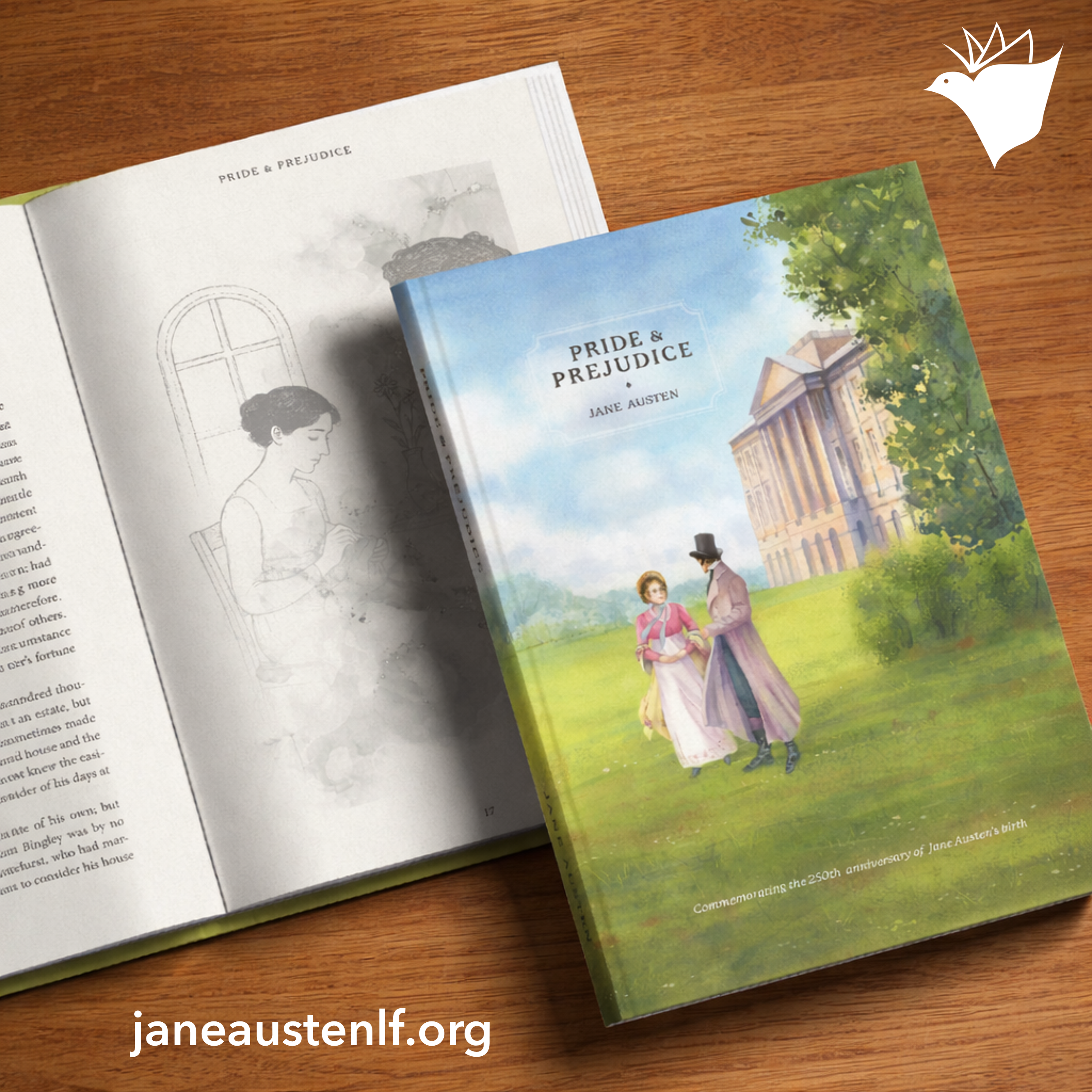
Pride & Prejudice published by the Jane Austen Literacy Foundation, brings together the work of Jane’s family with over 30 volunteers, ambassadors and supporters, dedicated to raising money to support our mission - to preserve and advance reading and writing as an essential human skill.
With an introduction by our founder, Caroline Jane Knight, contributions from Jane’s family and twenty five ambassadors and Foundation supporters, cover by Julia Grantham and Lena Tarnovski, and illustrations by Caroline Siassios, this beautiful publication of Pride & Prejudice is a must have for any Jane Austen lover.
🎭Jane Austen Improvised - A Fundraising Evening
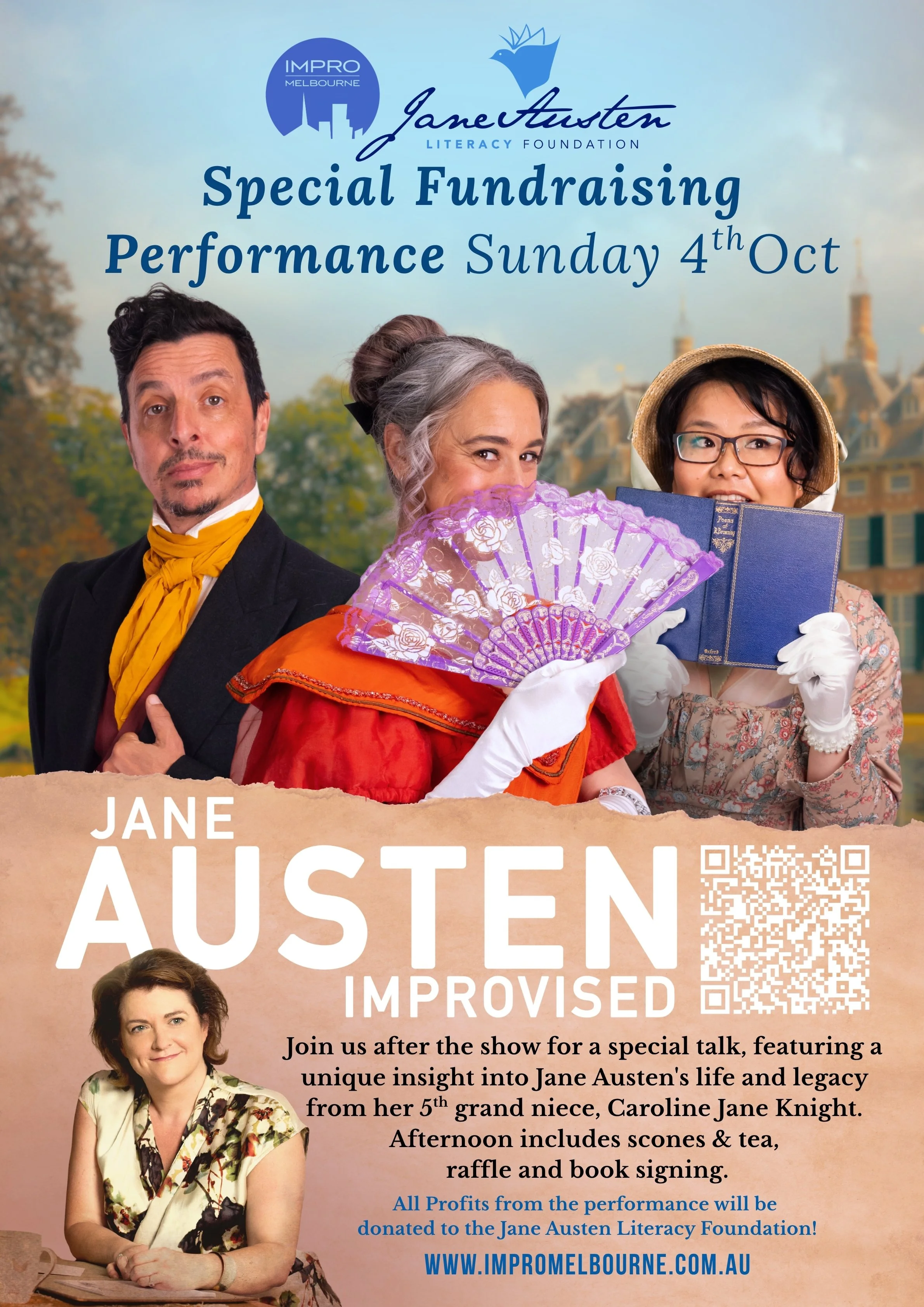
Join Caroline Jane Knight, Jane Austen's fifth great-niece and our Foundation founder, at Impro Melbourne’s Jane Austen Improvised at the Melbourne Fringe Festival.
After an unscripted and hilarious performance of Jane Austen Improvised, Caroline will share stories from her childhood in Jane Austen’s Chawton and reveal Jane's surprising lifelong love of theatre — the born performer behind the novels.
Profits from the evening go directly to the Jane Austen Literacy Foundation.
✨ When: Sunday 4th October
🕒 Time: 3.00 PM
📍 Where: Impro Melbourne Theatre, West Melbourne